
KNOWLEDGE
Learn comprehensive boron material knowledge including physical properties, mineral sources, production techniques and wide industrial applications across high-tech and manufacturing fields.
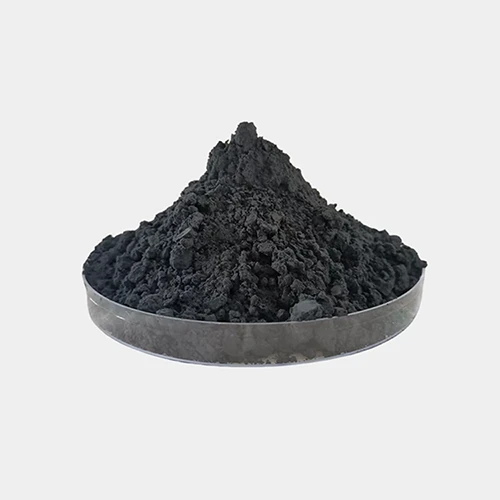
Boron, element number 5 on the periodic table, never exists as pure free elemental boron in natural environments. It has an intense chemical affinity for oxygen, so it only appears bound within oxide-based compounds, borate minerals, dissolved aqueous solutions, and trace geological matrices across the Earth’s crust. Boron makes up roughly 0.001% of the crust’s total mass, scattered unevenly across rocks, soil, salt lakes, seawater, and volcanic springs, with concentrated mineable reserves limited to arid, volcanic, or hydrothermal land zones worldwide. Its unique physical traits—extreme hardness, high thermal stability, semiconductor properties, and neutron absorption capacity—also make refined boron materials ubiquitous in household goods, heavy industry, high-tech manufacturing, agriculture, and energy systems. This article divides boron’s occurrences into natural geological forms and man-made industrial products for clear classification.
1. Natural Geological Sources of Boron Compounds
### 1.1 Primary Borate Ore Minerals (Commercial Mining Reserves)
Economically viable boron deposits form in evaporated salt basins and ancient lake beds, dominated by sodium, calcium, and magnesium borate ores. Turkey holds around 85% of the world’s identified boron mineral reserves, followed by the United States, Chile, Russia, and China. The most mined minerals include borax (tincal, hydrated sodium tetraborate), kernite, colemanite, and ulexite, extracted via open-pit mining in California’s Mojave Desert and Turkey’s Kirka mining district. Sassolite, natural raw boric acid, emerges as crystalline deposits from volcanic hot springs in Italy and parts of Central Asia. Minor trace boron silicate minerals such as tourmaline spread across igneous and metamorphic rock formations, though their boron content is too low for large-scale extraction.
1.2 Water and Soil Matrices
Dissolved boron permeates nearly all water bodies. Global seawater carries an average 4.6 ppm boron, sourced from mineral erosion and underwater hydrothermal vents; saline inland lakes and salt flats boast far higher concentrations due to continuous water evaporation that concentrates borate brines, a secondary source for boron chemical refining. Fresh groundwater and surface rivers contain less than 0.01 ppm boron in temperate humid zones, while arid agricultural regions reach 10 to 100 ppm. All agricultural soils hold trace boron between 2 ppm and 20 ppm, an essential micronutrient for vascular plant growth; low-boron soil areas suffer crop growth defects and reduced fruit yields, requiring boron-rich fertilizer supplementation. Ordinary crustal rocks carry scattered boron traces: basalt holds about 5 ppm boron, while shale sedimentary rock accumulates up to 100 ppm boron from long-term sediment deposition of mineral particles.
2. Daily Household & Consumer Products Containing Boron
Refined borates and mild boron derivatives are common additives in everyday domestic supplies. Borax and sodium perborate serve as core bleaching, stain-removing, and water-softening agents in laundry detergents, dishwashing powders, and multi-surface household cleaners, valued for gentle oxidizing cleaning power without harsh corrosion. Diluted boric acid appears in eye wash solutions, mild antiseptics, tooth whitening pastes, and oral care rinses. It also acts as a low-toxicity indoor insect repellent targeting ants, cockroaches, and fleas, plus eco-friendly wood preservatives that resist mold and termite damage. Boron compounds feature in ceramic tableware glazes, heat-resistant kitchen borosilicate glass cookware, cosmetic emulsifiers, and flame-retardant fabric treatments for curtains, mattresses, and children’s textiles.
3. Traditional Heavy Industrial Materials with Boron Additives
The glass and ceramics industry consumes nearly half of all globally produced boron compounds, making it the largest downstream application sector. Borosilicate glass for labware, solar panels, and pharmaceutical vials relies on boron oxide to lower thermal expansion coefficients, granting exceptional shock and heat resistance. Continuous fiberglass insulation for construction and lightweight structural panels mixes borate flux to boost tensile strength and chemical durability. In ceramics manufacturing, borax functions as a melting flux for kiln glazes, enhancing surface gloss and reducing firing temperature costs.
Metallurgy widely uses micro-dose boron additives: trace elemental boron powder (as low as 0.003%) improves hardenability and wear resistance in specialty boron steel for automotive gears, cutting machinery, and construction fasteners. Boron carbide powder acts as ultra-hard industrial abrasive for grinding wheels, drill bits, and heavy-duty cutting tools, with a Mohs hardness rating of 9.3 harder than most silicon-based abrasives. Welding and metal smelting utilize borate flux to dissolve metal oxide impurities during hig